Tree Service Hickory NC removes hazardous, dead and unwanted trees from residential and commercial properties across Catawba County. Every removal starts with a site inspection to plan the drop or the rigging, followed by a written price before any saw starts. The crew then fells or sections the tree, hauls it away and grinds the stump if you want it gone the same day. Whole tree drops in open yards, climbing jobs beside a house or power line, and storm-damaged trees that came down on their own, we handle all of it.
We work on single-family lots, rental properties and small commercial sites. A bucket truck and chainsaws cover most open-yard work. Climbing gear and rigging come out for anything near a structure, and a crane handles large or technical drops. Licensed and insured on every job, with a free inspection before you pay for anything.
(828) 522-9430. Free Inspection.
Why Trees Come Down More Often in Hickory
Hickory gets about 45 inches of rain a year over roughly 107 days, well above the national average, and the ground underneath most yards here is sandy loam. Sandy loam drains faster than clay, but it still saturates during a wet stretch, and it holds a tree’s roots less firmly than denser soil to begin with. That combination is why mature trees in this area are more likely to uproot whole in a storm than to simply drop a few limbs.
Winter adds a second reason trees fail here. Catawba County sees close to 85 freezing days a year, and each freeze-thaw cycle widens whatever crack or weak union was already sitting in a trunk or at the base of the roots. A tree that looked stable in October can fail in February from damage the cold did over several months, not from the storm that finally brought it down. Loblolly pine is shallow-rooted for its height and is one of the first species to go over in saturated ground. Water oak and red maple carry a different risk, splitting at a codominant trunk (a double leader with a weak union) rather than uprooting outright. The inspection identifies which of these a given tree is heading toward before the crew ever picks up a saw.
Tree Services We Provide
Tree Trimming
Structural pruning cuts back storm-prone limbs and thins a heavy canopy without taking the tree down. See our Tree Trimming page for pricing and process.
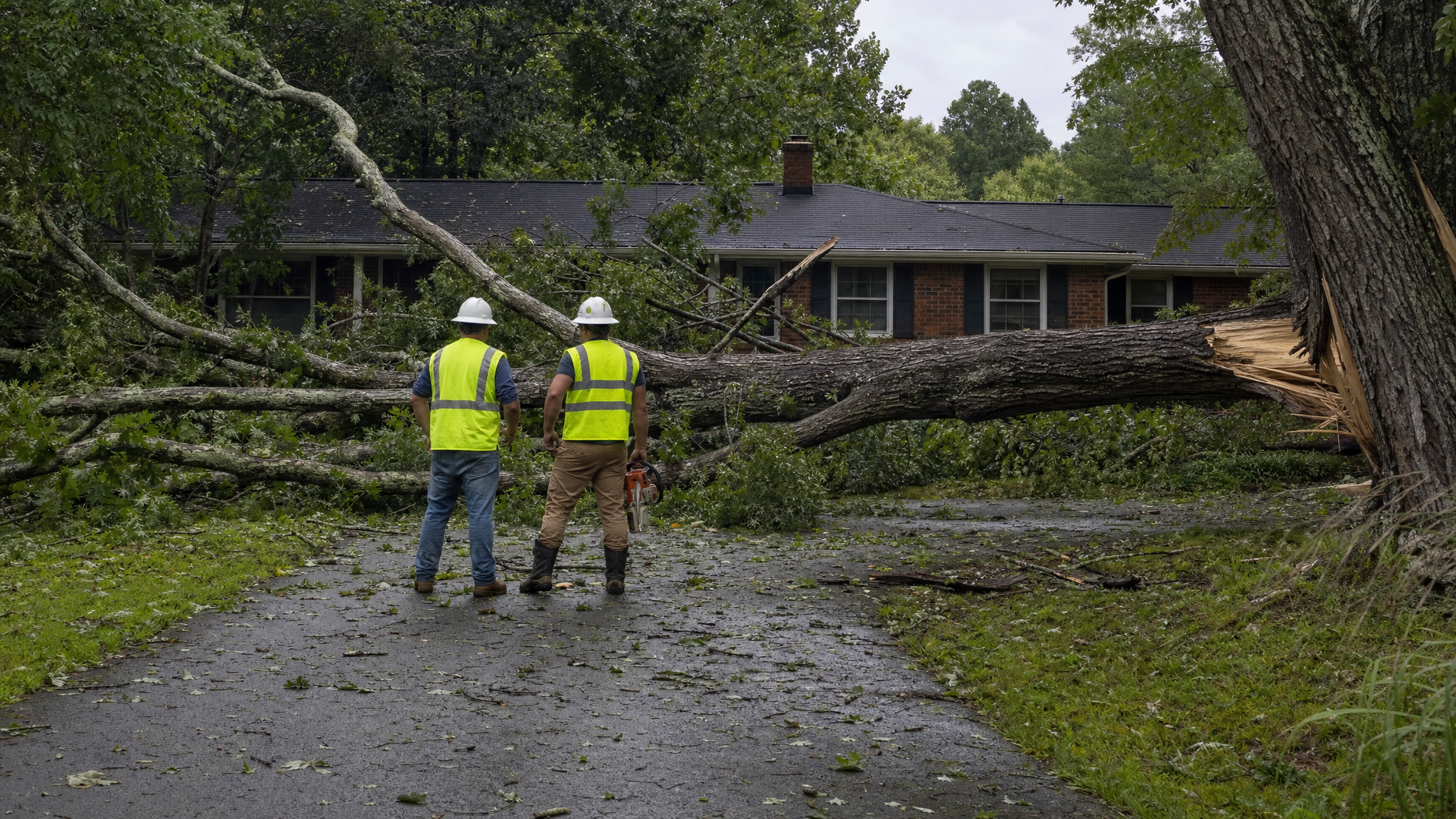
Emergency and Storm Damage Removal
A tree down on a structure, a car or a driveway after a storm, or a hung tree still attached and swaying. See our Emergency Storm Damage Tree Removal page for response details.
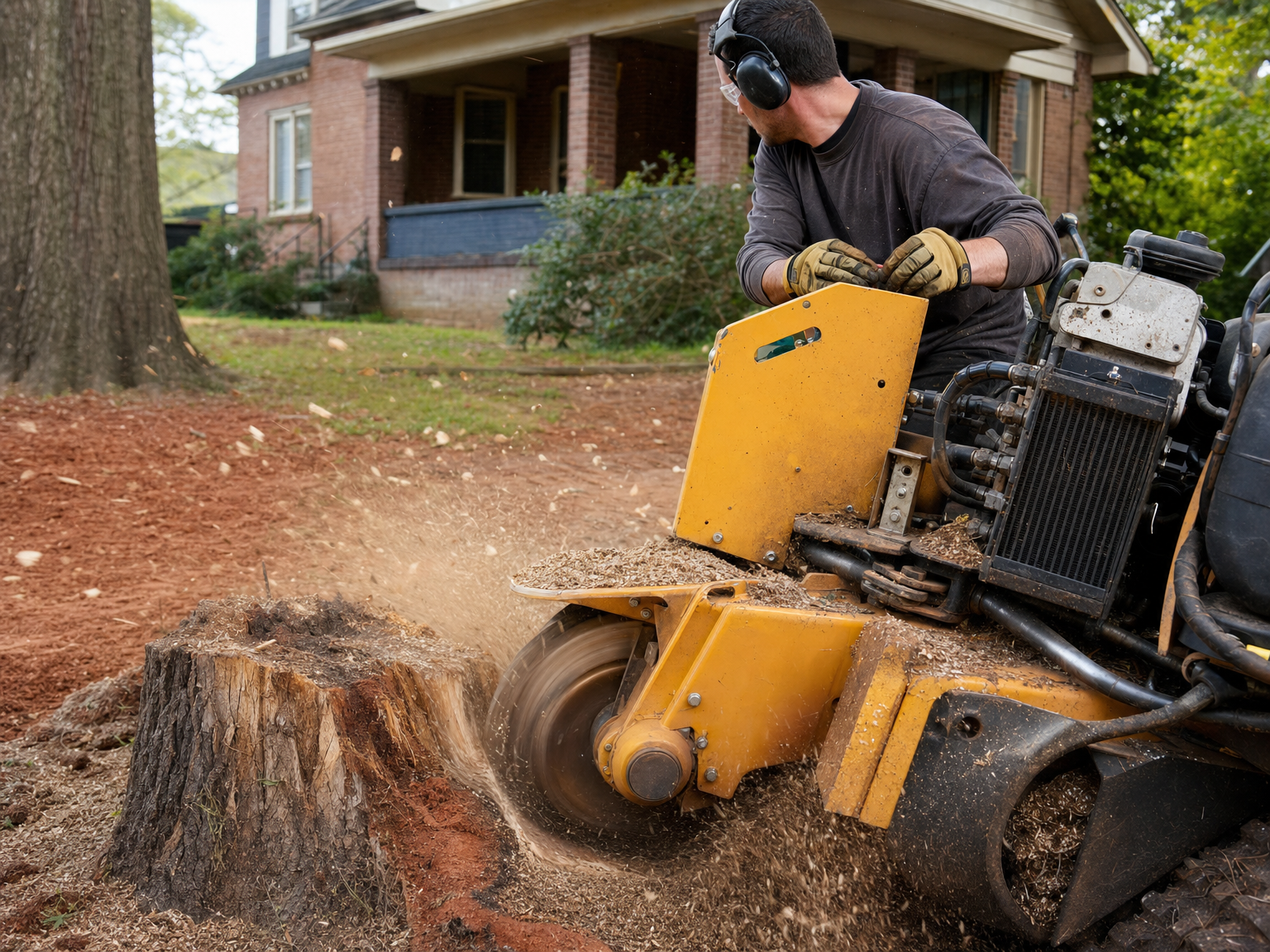
Stump Grinding
Grinding a stump flush below grade after a removal, or on its own for a stump left by another crew. See our Stump Grinding page for pricing.
Hazardous Tree Removal
Dead, leaning or storm-weakened trees that pose an immediate risk to a structure, a fence or a person. See our Hazardous Tree Removal page.
Land Clearing
Clearing a wooded lot for a build site, a driveway or a pasture, priced per acre rather than per tree. See our Land Clearing page.
Deadwood and Diseased Tree Removal
Dead limbs or a tree too far gone from disease to save. See our Deadwood and Diseased Tree Removal page.
Which Tree Service Do You Actually Need?
Four situations get called “tree removal” and they price and schedule differently. A dead or dying tree still standing usually needs full removal once enough canopy is gone that the tree cannot recover, rather than trimming, which only helps a tree that still has healthy growth to work with. A leaning tree after a storm may only need cabling or bracing, and only if the root plate is still mostly intact. A tree that has visibly lifted the soil on one side is coming down regardless. A tree with a split trunk or a double leader that has opened up at the union is a removal candidate regardless of canopy health, because that weak point will fail again. A stump left from an old removal is a grinding job only, no crew or crane required. If you are not sure which describes your tree, the inspection is free, including if the honest answer is that it does not need to come down.