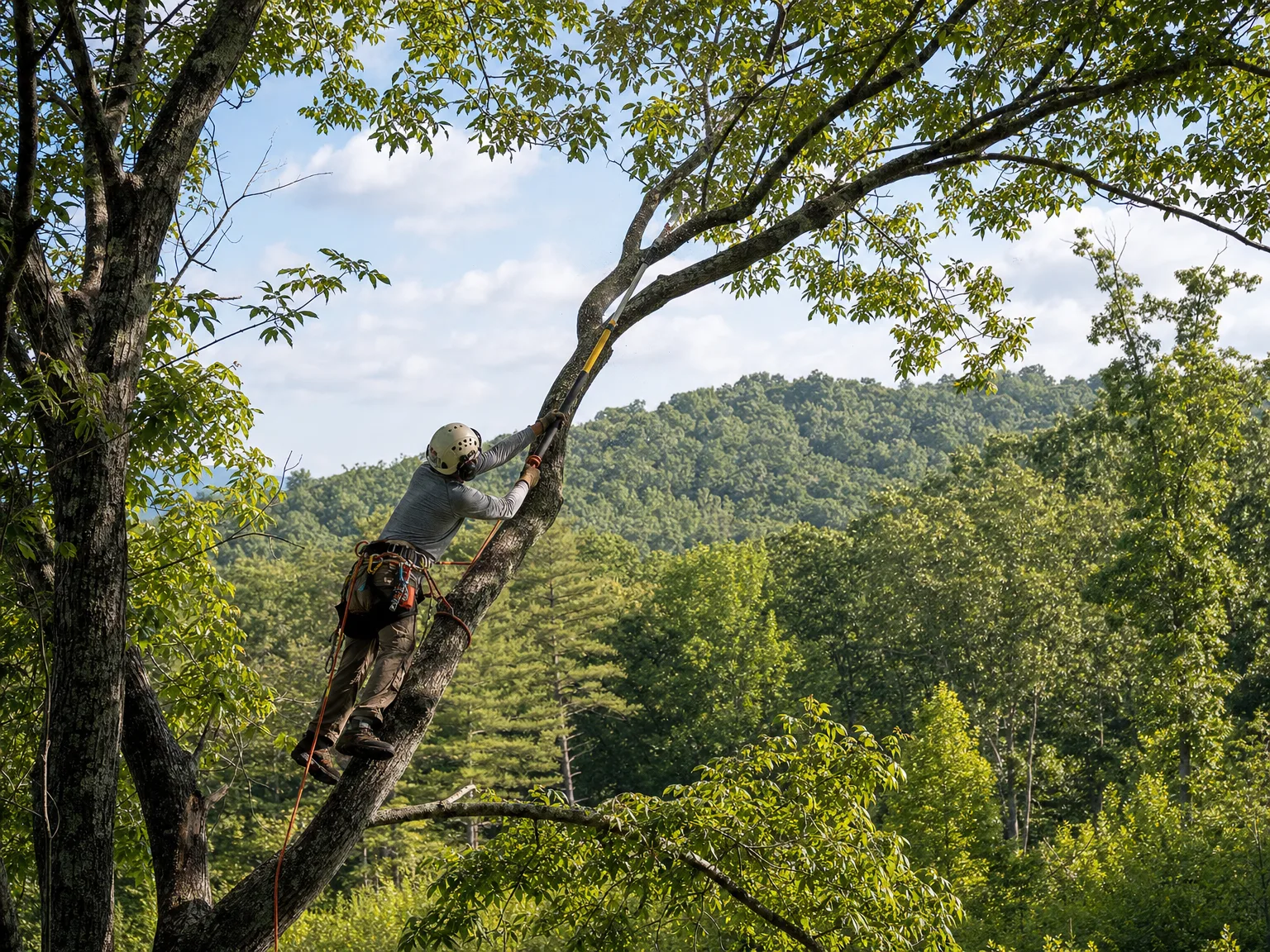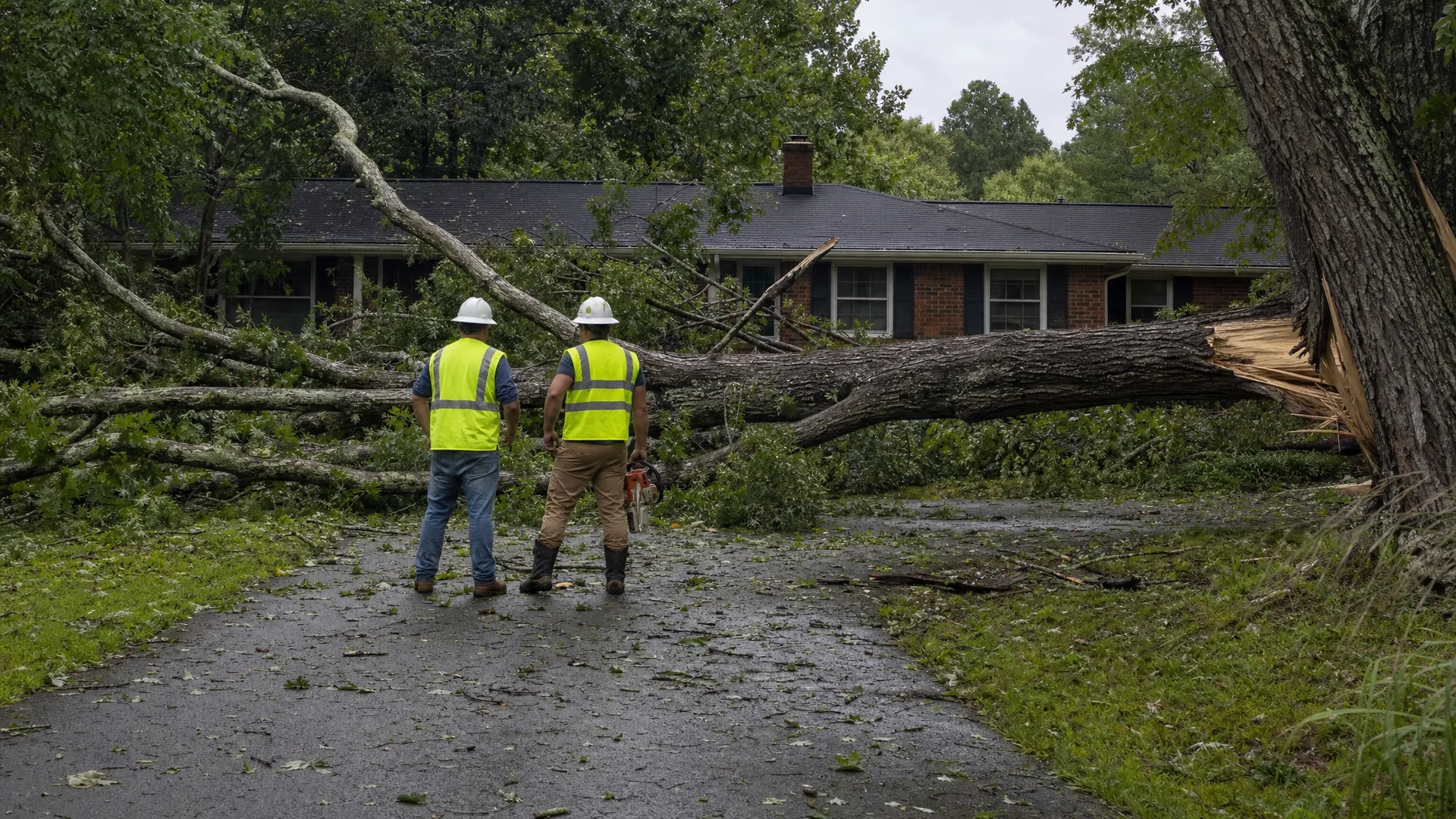
Sandy loam soil that saturates in heavy rain, plus close to 85 freezing days a year that widen existing trunk and root damage, are a big part of why hazardous trees show up here. See our Tree Removal page for the local climate detail behind that.
What Makes a Tree Hazardous?
Four signs mean a tree needs a real look instead of just watching it. A visible lean that is new or getting worse, especially with lifted soil on one side of the root plate, means the roots are losing their grip. Dead limbs or a thinning canopy on part of the tree while the rest looks healthy often signals disease or root damage on that side. A split trunk or a codominant union with a visible crack is a structural failure waiting on the next load, wind or ice. A tree standing close to a structure, driveway or power line raises the stakes of any of the above, since a failure there does real damage rather than falling into open yard. If you see any of these, the assessment is free, including if the honest answer is that the tree can be monitored rather than removed.
What Hazardous Tree Removal Costs in Hickory
Hazardous tree removal runs $500 to $9,000 or more, a wider range than a standard job. A leaning or structurally compromised tree often needs a crane or careful sectional work that a straightforward open-yard job does not. A smaller hazardous tree with a clear drop zone sits at the low end, similar to a standard removal. A large leaning tree close to a structure, needing a crane and piece-by-piece work to protect what is nearby, sits toward the top of that range or above it. You get an exact number after the assessment, in writing, before anything is cut.