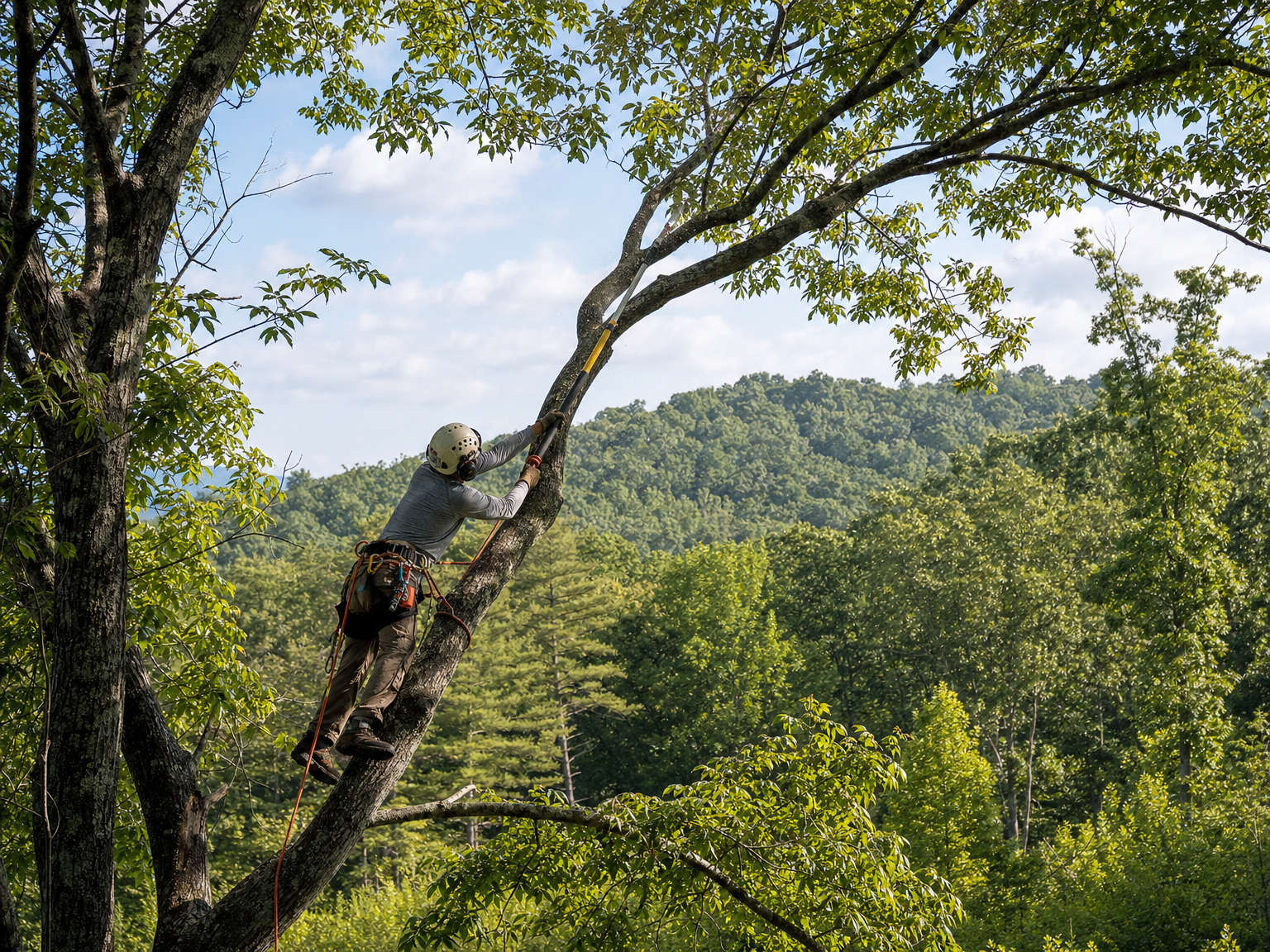
Tree Service Hickory NC feeds trees that an assessment has flagged as nutrient-deficient, not on a guess with a bag of fertilizer off a home store shelf. A soil test around the root flare comes first. Then a root-zone or deep-root feeding, matched to what the soil is actually missing. Then a follow-up plan tied to the tree’s species: loblolly pine, red maple, white oak and the rest of what grows across Catawba County. Sandy loam soil, common across Hickory yards, drains fast and can carry nutrients past a shallow-rooted tree before it gets the benefit, which is why a soil-based approach beats a surface spread here.
We work single-family lots, rental properties and small commercial sites. Fertilization here follows an assessment, not a sales call, so a tree gets fed because a diagnosis found a real deficiency, not on a schedule sold up front. Licensed and insured on every visit, with a free estimate before any work is scheduled, across Hickory, Conover, Newton, Longview and Maiden.
(828) 522-9430. Free Estimate.
Hickory gets 45 inches of rain a year. That keeps sandy loam soil wet enough to move nutrients past shallow roots before a tree ever uses them, a real driver of the deficiencies an assessment finds here. See our Tree Health Assessments page for how that gets diagnosed.
Tree Health Services We Provide
Tree Health Assessments
The diagnosis that tells you whether fertilization is actually the right fix. See our Tree Health Assessments page for what we check and what it costs.
Certified Arborist Services
ISA-certified arborists working to ANSI A300 standards for the assessment behind a fertilization plan. See our Arborist page for scope and pricing.
Tree Removal
For a tree an assessment finds past the point fertilization can help. See our Tree Removal page for pricing and process.
Hazardous Tree Removal
When a declining tree has also become a structural risk rather than just a health problem. See our Hazardous Tree Removal page.
Which Fertilization Approach Do You Actually Need?
Three situations get called “fertilization” and are not the same job. A young or newly planted tree often needs a light, establishment-focused feeding to help roots take hold, a smaller job than a mature tree needs. A mature tree showing thin canopy or slow growth usually calls for deep-root or root-zone feeding matched to a soil test, since a surface spread rarely reaches roots that run several feet down. A tree with a diagnosed disease entity, verticillium wilt or a canker, needs the disease addressed first, and fertilization plays a supporting role rather than the whole fix. The assessment is what tells you which of the three you actually have.