📞 (828) 522-9430
Licensed & Insured
Free Estimates

Deadwood and Diseased Tree Removal in Hickory, NC

[Tree Service Hickory NC](/) removes dead limbs and diseased trees before they become a bigger problem for the rest of your yard across Catawba County. Every job starts with an inspection to tell whether deadwooding alone solves it or the whole tree needs to come down, a written price, the removal itself, then a full cleanup and haul away. A few dead limbs in an otherwise healthy tree, a tree showing disease across the canopy, and a tree already dead standing, we handle all of it.

Get a Quote

Tree Service Hickory NC removes dead limbs and diseased trees before they become a bigger problem for the rest of your yard across Catawba County. Every job starts with an inspection to tell whether deadwooding alone solves it or the whole tree needs to come down, a written price, the removal itself, then a full cleanup and haul away. A few dead limbs in an otherwise healthy tree, a tree showing disease across the canopy, and a tree already dead standing, we handle all of it.

We work on single-family lots, rental properties and small commercial sites. A bucket truck handles most deadwooding and canopy work, and full removal equipment comes out when the tree itself, not just a few limbs, needs to go. Licensed and insured on every job, with a free inspection before you pay for anything.

(828) 522-9430. Free Inspection.

Loblolly pine, water oak and red maple, common across Hickory yards, each carry their own disease and pest risks that show up as dead or dying sections of canopy. See our Tree Removal page for the local climate detail behind that.

Tree Services We Provide

Tree Removal

Full removal of a dead, hazardous or unwanted tree. See our Tree Removal page for pricing and process.

Tree Trimming

Structural pruning, canopy thinning and clearance work on a tree that is still sound. See our Tree Trimming page for pricing and process.

Hazardous Tree Removal

A dead or storm-weakened tree that has not fallen yet but poses a real risk. See our Hazardous Tree Removal page.

Stump Grinding

Grinding a stump flush below grade after a removal. See our Stump Grinding page for pricing.

Deadwooding or Full Removal, Which Do You Need?

Three situations get called about a dead or sick-looking tree, and they are not the same job. A tree that is mostly healthy with a few dead limbs, often from age, storm damage or shading out lower branches, usually just needs those limbs removed. That is called deadwooding, and it leaves the rest of the canopy untouched. A tree with disease spread across a larger portion of the canopy, southern pine beetle in a loblolly pine or oak wilt in a water oak, is usually a removal candidate once established. Treatment at that stage rarely saves the tree, and the disease can spread to neighbors nearby. A tree that is already dead standing, no live foliage anywhere, is a removal job regardless of species. A standing dead tree only gets more hazardous with time, not less. The inspection tells you which of the three you actually have.
Not sure what your tree actually needs?

Tell us what the tree looks like and where it stands, and you get a real number and a real timeline before anything is cut.

Request a Quote

What Deadwood and Diseased Tree Removal Costs in Hickory

Removing a diseased or dead tree runs $500 to $3,000 or more, the same range as a standard tree removal, since the removal itself works the same regardless of why the tree is coming down. Deadwooding alone, just removing a handful of dead limbs from an otherwise healthy tree, costs less and prices closer to a trimming job. That typically runs $500 to $1,000 depending on how many limbs and how high they are. A full removal of a large dead or diseased tree sits at the higher end of the range, similar to any large removal. You get an exact number after the inspection, in writing, before anything is cut.

How Long It Takes

Deadwooding a handful of limbs from an otherwise healthy tree usually takes under two hours. A full removal of a dead or diseased tree takes about as long as a standard removal of the same size, since the cutting and rigging work the same either way. A severely diseased tree with brittle wood can actually take extra care, since dead or disease-weakened wood can fail unpredictably during the cut rather than behaving like sound timber. You get a time estimate at the inspection based on the actual tree.

How the Job Runs, Start to Finish

Every job follows the same four stages, whether it is a few dead limbs or a full removal.

Inspection and a Written Price

We look at how much of the tree is affected, whether disease or dead limbs are isolated or spreading, and whether deadwooding is enough or the tree needs to come down. You get a price before anything is cut.

Protecting Your Property

Anything under the work area, a fence, a garden bed, a parked car, gets covered or moved before the first cut, especially important with brittle, disease-weakened wood that can behave unpredictably.

The Work Itself

Dead limbs get cut back to the branch collar on a tree that is staying. A tree coming down entirely is felled or sectioned the same way as a standard removal, with extra care taken around brittle or hollow sections.

Cleanup and Haul Away

Limbs, trunk sections and debris get hauled off the same day. If you want the stump ground after a full removal, that is available in the same visit.

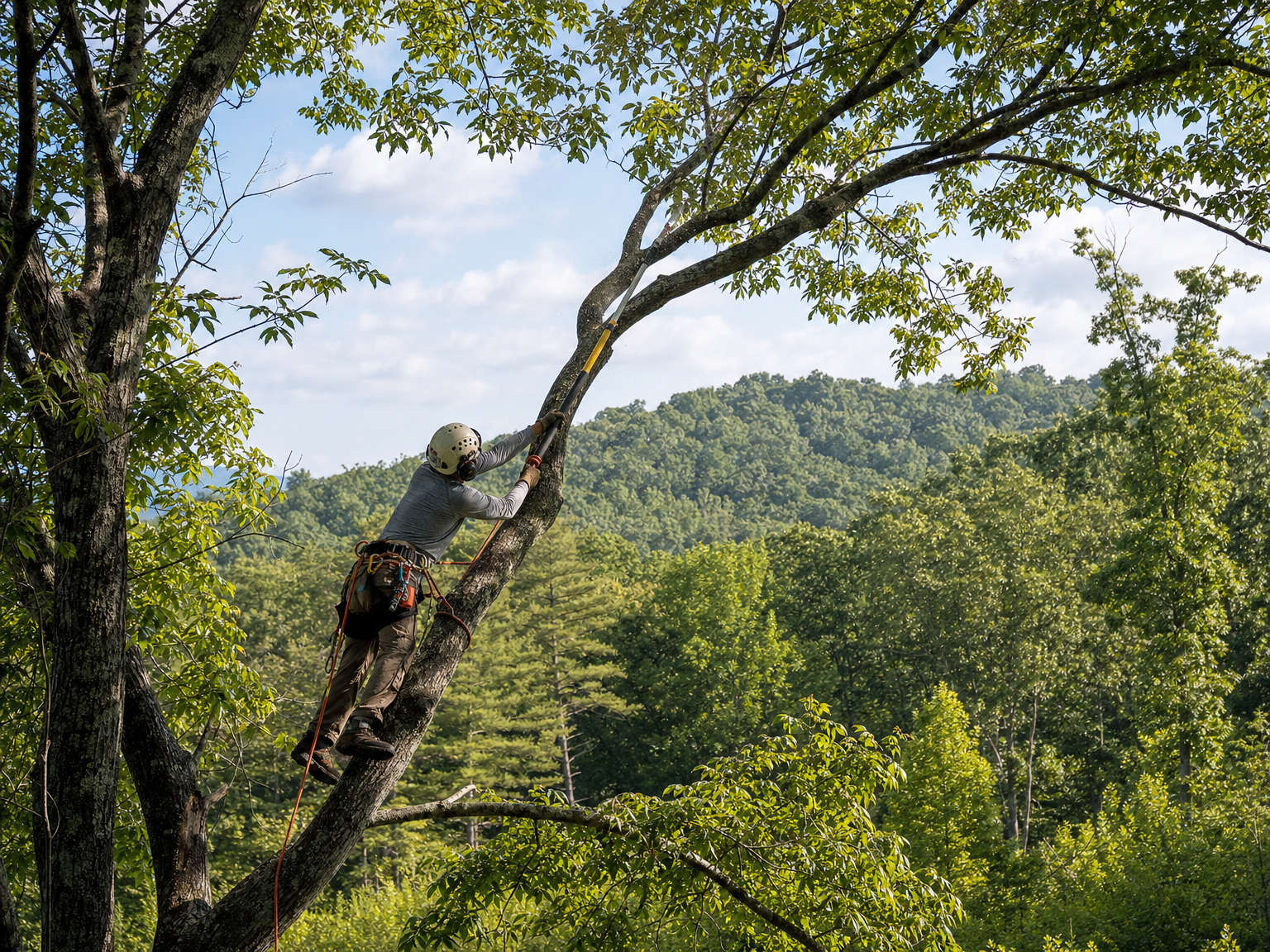
Arborist using a pole saw to trim limbs high in a tree canopy
Debris Hauled Before We Leave

Cutting, rigging, hauling and cleanup run as one job on one schedule, rather than a crew that drops the wood and leaves the cleanup to you.

Debris is hauled off and the yard is raked clean before the truck leaves, so the only thing left behind is the stump, if you asked us to leave it.

See all services

What Goes Wrong When This Is Done Badly

Cutting into disease-weakened or dead wood without accounting for how brittle it is can cause a limb or section to fail unpredictably mid-cut. Leaving dead limbs in a tree that gets called “trimmed” rather than actually removing them back to sound wood leaves the hazard in place under a fresh-looking canopy. Treating an infested tree, southern pine beetle in particular, as a wait-and-see problem instead of removing it promptly lets the infestation spread to healthy trees nearby before anyone acts. Skipping the inspection and assuming a dead-looking tree is simple to drop can miss that the trunk itself is hollow or compromised, changing how it needs to come down.

What We Do and What We Don’t

We remove dead limbs, deadwood full canopies, and take down trees that are dead or too far gone from disease to save. We do not diagnose the specific disease or pathogen involved, that calls for a certified arborist’s assessment. We also do not apply fertilizer, fungicide or pesticide, since that work calls for a pesticide applicator license from the state. If a tree looks like it might respond to treatment rather than removal, we say so and point you toward who can make that call.

Why Choose Tree Service Hickory NC

  • Licensed and Insured: every job is covered, on every property we work.
  • Deadwooding or Full Removal, Your Call: the inspection settles honestly which one your tree actually needs.
  • We Know Local Disease Pressure: southern pine beetle, oak wilt, verticillium wilt and what each one looks like in the trees that grow here.
  • A Price Before Work Starts: the number you approve at inspection is the number on the invoice.
  • Same-Visit Stump Grinding: available after a full removal, no separate trip.
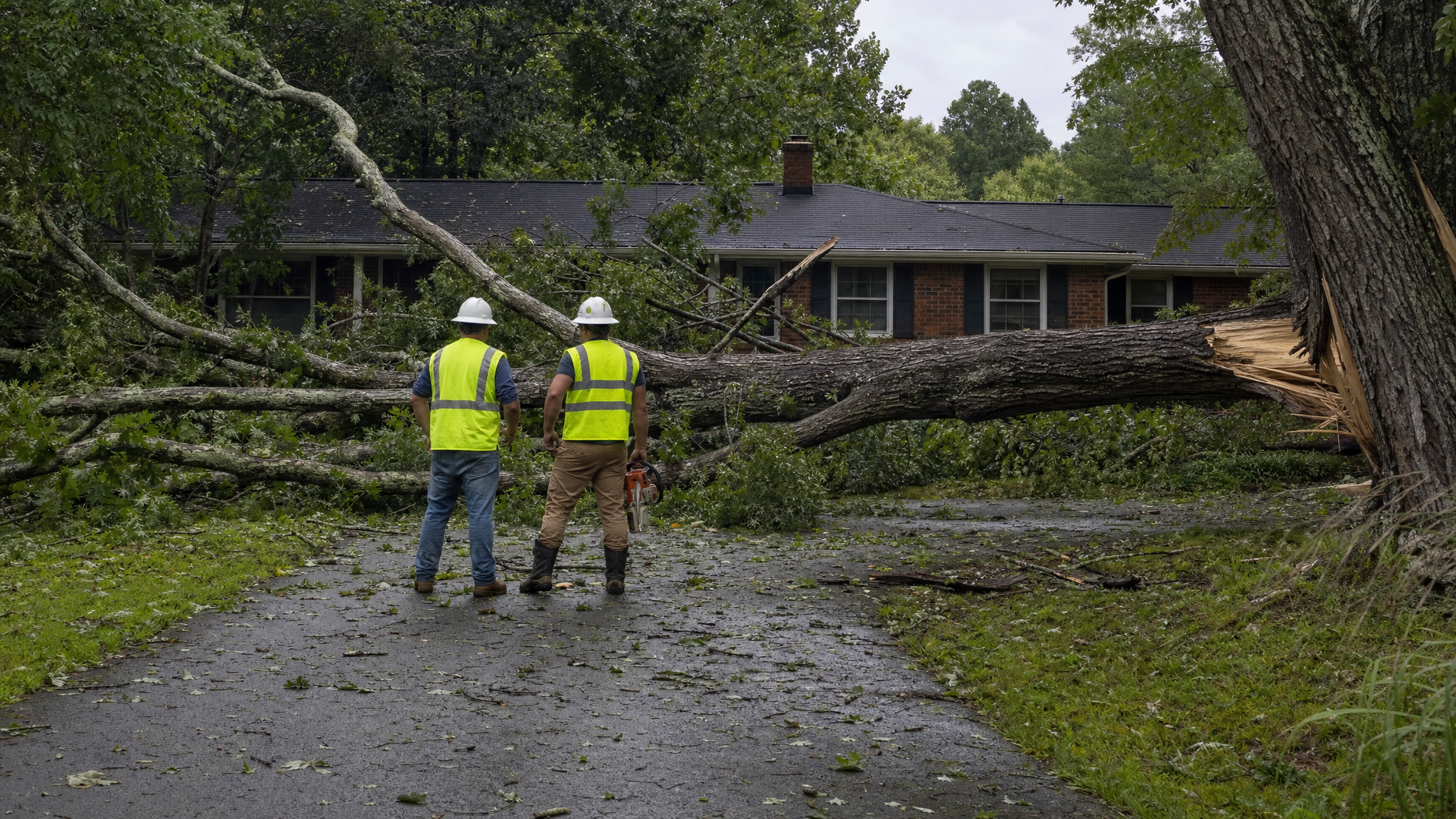
A fallen tree blocking a residential driveway
Built for how trees fail here

Hickory takes about 45 inches of rain a year across roughly 107 days. Sustained wet soil is what lets a mature tree uproot rather than just shed limbs in wind, and repeated freeze-thaw cycles widen existing trunk and root defects over winter.

Get a free estimate

What a Typical Job Looks Like

A homeowner calls about a loblolly pine with browning needles starting at the top and small pitch tubes on the bark, a sign of southern pine beetle. The inspection confirms active infestation and recommends removal rather than treatment, since the infestation is already established and the tree poses a spread risk to two healthy pines nearby. The crew removes the tree in sections given its proximity to a fence line, then hauls the wood off site rather than chipping it, since infested wood should not be left on the property. Total time on site runs a few hours for a job this size.

Where We Work

Southern pine beetle and oak wilt spread from yard to yard regardless of the town line. The same inspection and removal standard applies inside Hickory or out toward Conover and the rest of Catawba County. See our Service Areas page for the full list of towns we cover.

Get Your Free Inspection

Dead and diseased tree removal in Hickory runs $500 to $3,000, and deadwooding alone often costs less. The inspection is free, including if the honest answer is that a few limbs solve it rather than the whole tree. Call (828) 522-9430 to schedule an inspection, or reach out through our contact page for a same-day callback.

Deadwood and Diseased Tree Removal in Hickory, NC FAQs

How much does it cost to remove a dead or diseased tree in Hickory, NC?

Removal runs $500 to $3,000 or more, the same range as a standard removal. Deadwooding a handful of limbs alone typically runs $500 to $1,000. You get an exact price at the inspection.

How do I know if my tree has southern pine beetle or oak wilt?

Southern pine beetle shows as needles browning from the top down with small white pitch tubes on the bark. Oak wilt shows as rapid wilting and bronzing of leaves across the crown. Either one usually calls for removal once established, to protect neighboring trees.

Can a diseased tree be saved instead of removed?

Sometimes, early on. Once disease has spread across a large portion of the canopy, removal is usually the safer and more practical choice. We say so plainly at the inspection rather than recommending treatment that is unlikely to work.

Is Tree Service Hickory NC licensed and insured?

Yes, on every job.

Do you treat tree disease with fungicide or pesticide?

No, that work calls for a pesticide applicator license from the state, not a removal crew. We can point you toward who to call if treatment is still a realistic option.

What happens if I just remove the dead limbs instead of the whole tree?

Removing just the dead limbs is called deadwooding, and it is the right call when the rest of the tree is healthy. The inspection settles honestly whether that is enough or the tree needs to come down.

Get a Free Estimate

Tell us what the tree looks like and where it stands. We come out, look at the job, and give you a price and a timeline you can hold us to. Removal starts at $500.

Call Now Free Quote